
Are you planning to hire or to recruit staff in 2022? Either way, there’s a few things you need to know.
Are you planning to hire or to recruit staff in 2022? Either way, there’s a few things you need to know, writes GMA Executive Director Sarah Fitzpatrick
The Great Resignation. No, we’re not talking about former US President Donald Trump’s final days of administration, we’re referring to the so-called phenomenon that describes record numbers of employees leaving their jobs as a result of the Covid19 pandemic.
In September of last year, 4.4 million Americans left their jobs mainly in the arts, entertainment, hospitality and tourism sectors, while Microsoft claims 40 percent of the global workforce is considering leaving its employment this year.
These statistics are startling – and concerning – and while we are yet to see the trend explode in Australia, HR pundits believe that it’s coming and will begin to register here around March of this year.
Essentially, the pandemic has caused millions of workers to re-evaluate their work-life balance – that’s another blog entirely! – which leaves companies having to re-evaluate how they attract and retain employees.
Now the question of whether you intend to hire workers or to recruit employees takes on added meaning. Are you simply looking for someone to fill a position in your company or are you actively recruiting in a bid to attract the best available talent for your company long term?
See the difference? Well, you should because finding someone who is the right fit for your company in 2022 will be a pipeline process that bears little resemblance to the hiring practices of a few years ago.
“The tides have turned. Recruiters have well and truly entered a new age of hiring,” says Ruby Lee, a job whisperer at worldwide employment monolith Indeed.com. “The age of the candidate is here!”
Ruby says candidates are taking the power back with 1 in 4 Australian job hunters going into an interview with the mindset of interviewing the employee.
Hang on. Back up. There’s a pipeline for talent acquisition?
Yeah, there is. Recruiters worldwide define those stages as Awareness > Consideration > Interest > Application > Selection > Hire (see below) with your marketing campaign responsible for the first three steps
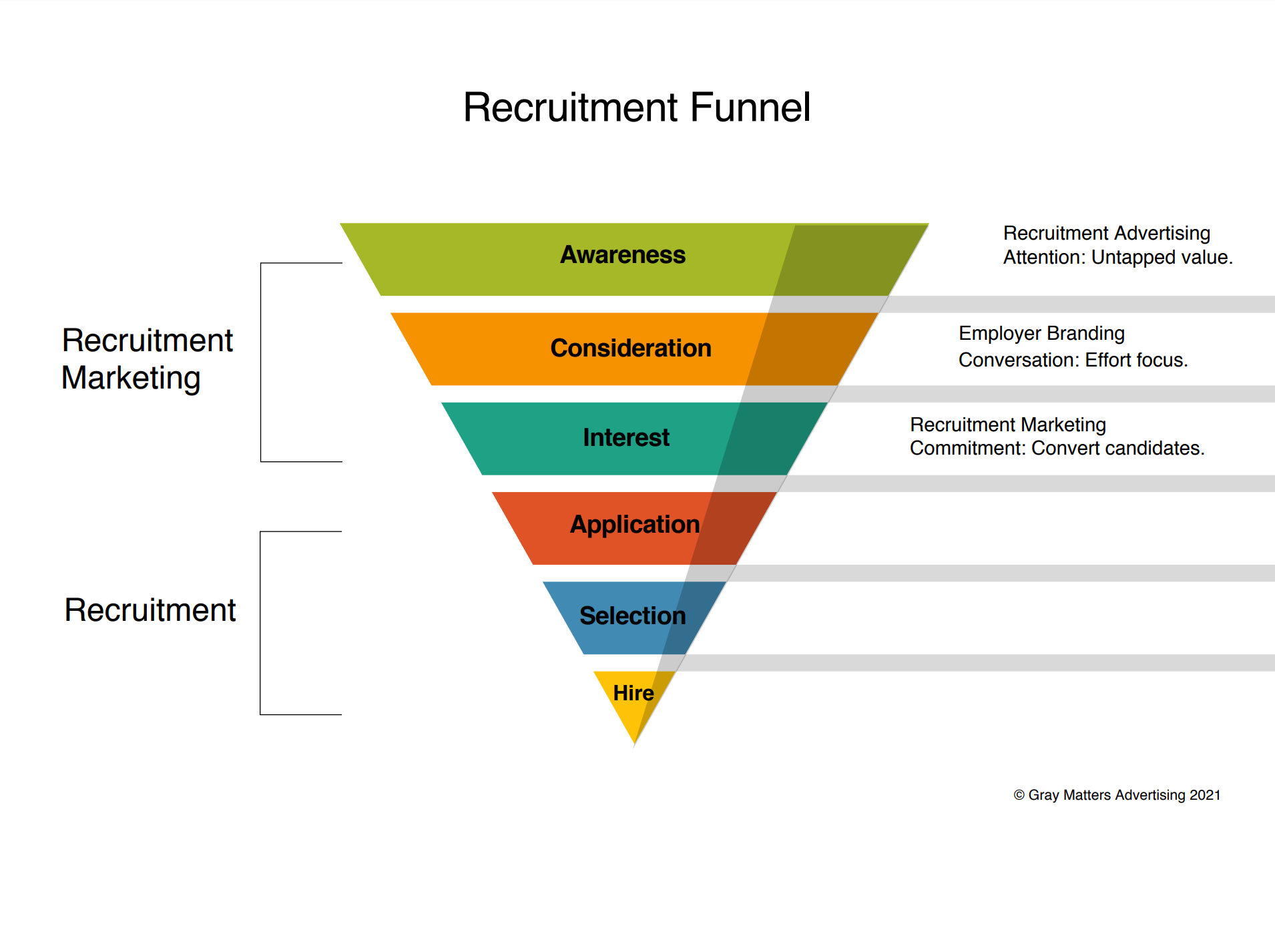
You can get your strategy in gear by setting down your SMART goals with an emphasis on measurement. Yes, you want to attract top talent, but what about increased employer brand awareness, more applicants from social media and a rise in your careers site visitors?
Create the persona of your ideal candidate beyond experience and skills to motivations, goals and personality type and take the fundamental step of crafting your employee value proposition.
Advertising a position as available means candidates are aware that you are hiring but to get multiple high calibre candidates to consider applying you need to emphasise your brand’s major selling points.
Tell your potential candidates what they will get in return if they buy into the job you are offering. Is your job the next step on their career path? What can you offer that other can’t? Think compensation, benefits, career pathways, the work environment and the company culture.
Only then can you turn to your recruitment content. Make it interesting, but useful. While traditional job advertisements state what you are looking for and present a list of duties and responsibilities, top candidates don’t want a laundry list. They want to be able to picture themselves in the role you are offering.
Now, where to place that content?
Say yes to digital and spend dollars on SEO to drive potential candidates directly to your careers site.
If you’re after a targeted audience, consider print in terms of industry publications and paid digital display which will give you the opportunity to address your chosen candidate demographic.
Re-targeting is a no-brainer as it allows you to re advertise to potential candidates who have already visited your site or partially completed a job application but left without finalising it.
And don’t forget:
- Update your careers site now so potential candidates can find the information they need to convince them they want to work for your company - your culture, your values and social responsibility.
- Develop employer brand ambassadors. Candidates trust employees 3 times more than the employer to provide information on working at the company, according to LinkedIn’s research.
- Optimise your brand for mobile phones and the social media networks that potential candidates are frequenting.
- Build your talent pool using current lead generation methods including your employee networks, calls to action on social media with links to application forms and attending recruitment fairs and industry networking events.
- Don’t forget to stay in contact with potential candidates and even former employees by delivering relevant, regular content via EDM or your website.
- And one more thing, once the recruitment process takes over, measure the metrics!
In truth, your recruitment marketing strategy may not come together overnight but over time you will attract a database of top talent wanting to work with you; current employees who will refer you to their peers; employees who want to return to work with your brand; and professional organisations singing your praises.
If you need support to optimise your careers site or advice on your recruitment strategy, talk to us at Gray Matters Advertising …
A note on client confidentiality
Gray Matters Advertising takes commercial confidentiality seriously. GMA works with government, commercial and other organisations whose projects, strategies, expenditure and results may be protected by commercial-in-confidence requirements, contractual obligations or non-disclosure agreements.
For this reason, some examples and case studies published by GMA are anonymised, and identifying information, commercially sensitive data or specific campaign details may be withheld. We do not publish confidential client information without appropriate authority. Where performance outcomes are referenced, GMA uses information drawn from its own verified campaign and reporting records.
Stay informed